Photovoltaic and storage solutions, when standard is not enough.
Official distributor of Risen Energy for Switzerland and Germany.
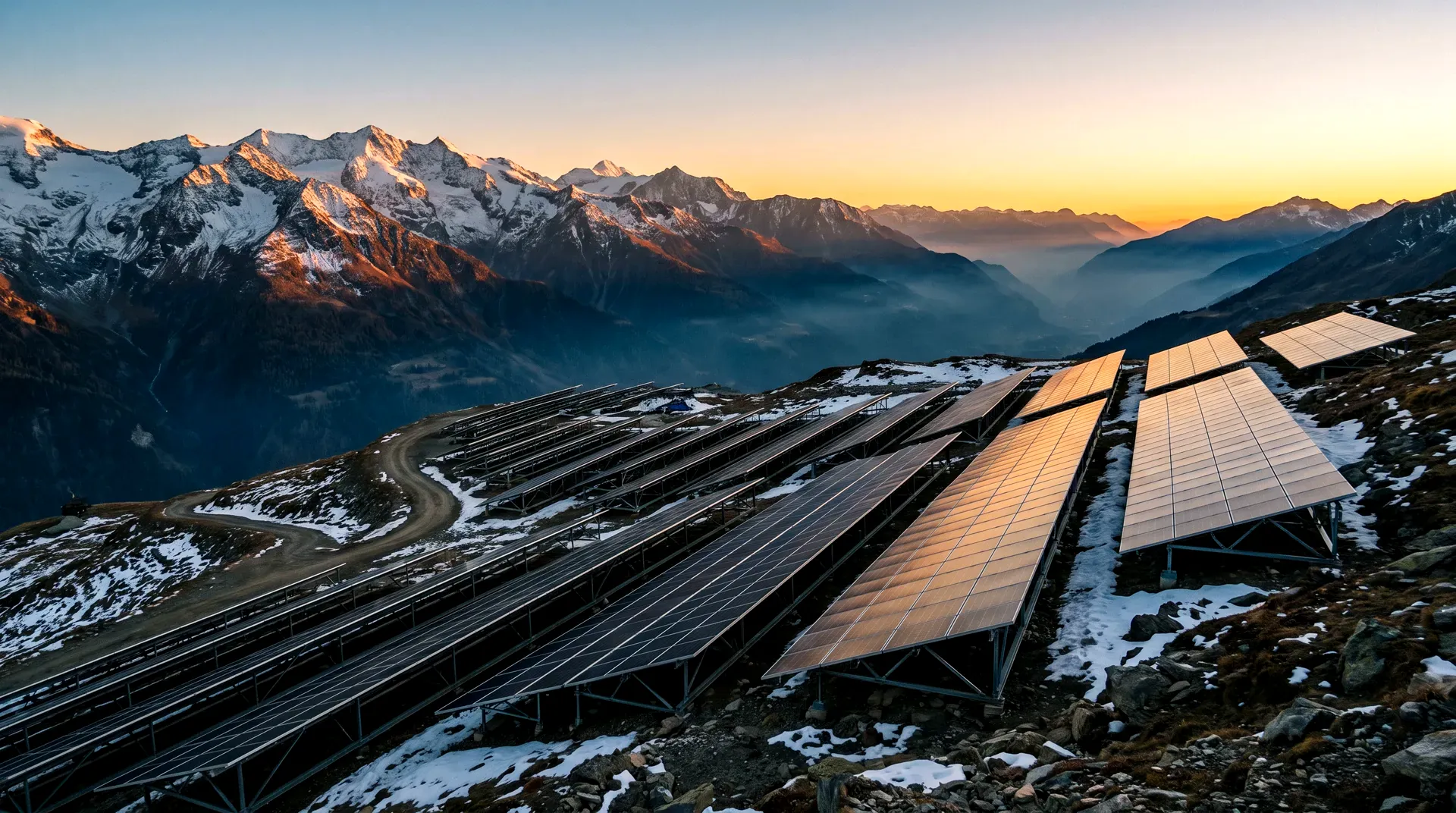
Modules up to 760 Wp, storage up to 5 MWh per container – and a system assembly designed for hail class HW 5 and high snow loads.
Current system project: Risen Hyper-ion Ultra HJT with steel frame. HW 5 and 13’000 Pa are development and test objectives, not confirmed system properties.
Official distribution
AB NETCOM is official distributor of Risen Energy for Germany and Switzerland.
Project partners receive a German-speaking contact for product selection, technical documentation, project-specific procurement and coordination with qualified specialist partners – for modules and storage systems from a single source.
Core markets
Where standard solutions reach their limits
Two core segments in which module output and price alone are not the deciding factors, but rather loads, logistics, supporting documentation and the number of work steps per installed kilowatt.
Core segment 1
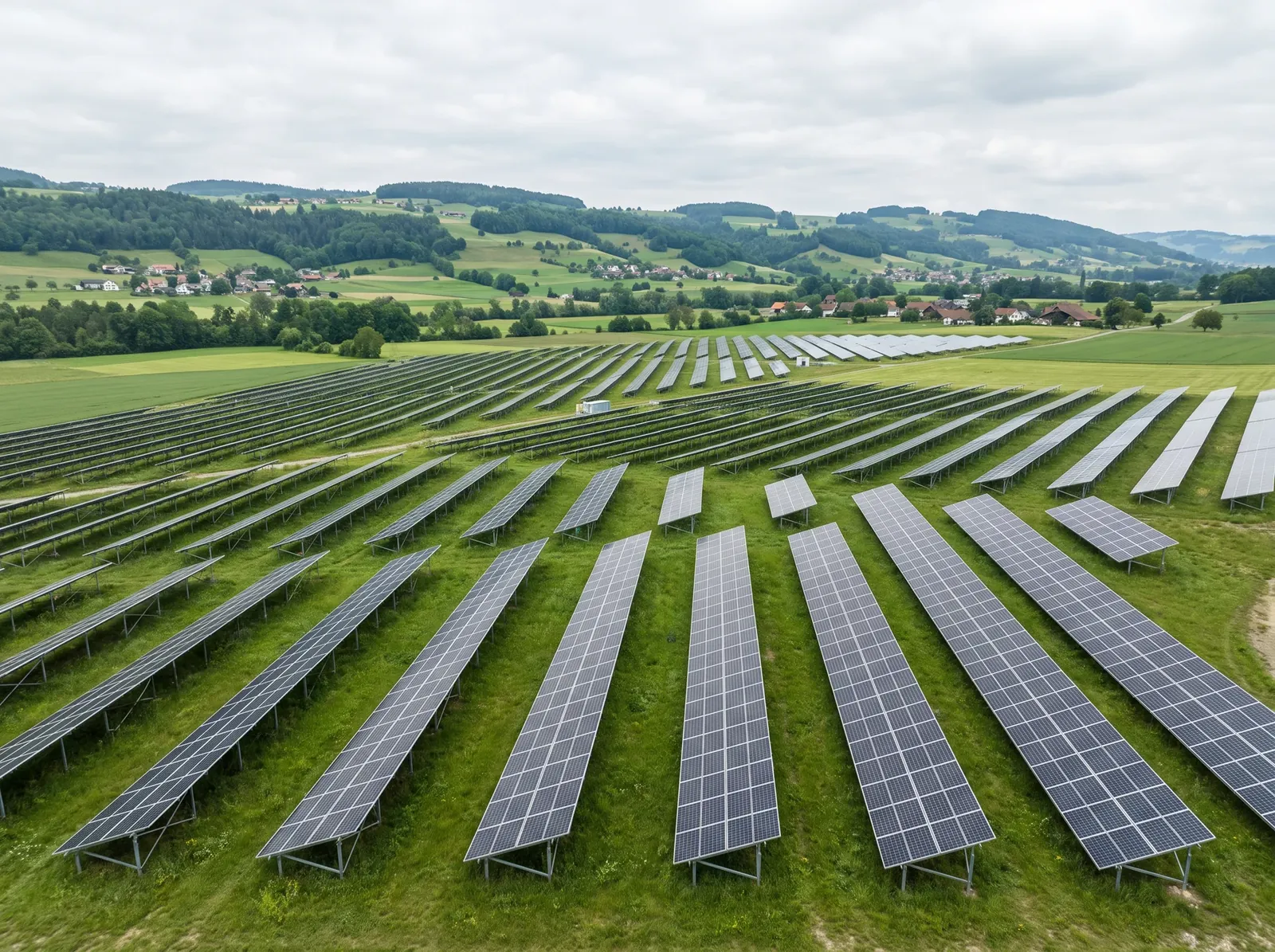
Large ground-mounted plants, highland and alpine sites
- high snow and wind loads, hail risk
- significant temperature fluctuations
- accessibility, logistics, installation conditions
- mounting structure and long-term operational reliability
- storage system for use at elevations of up to 4’000 m and operation from −30 °C
Core segment 2
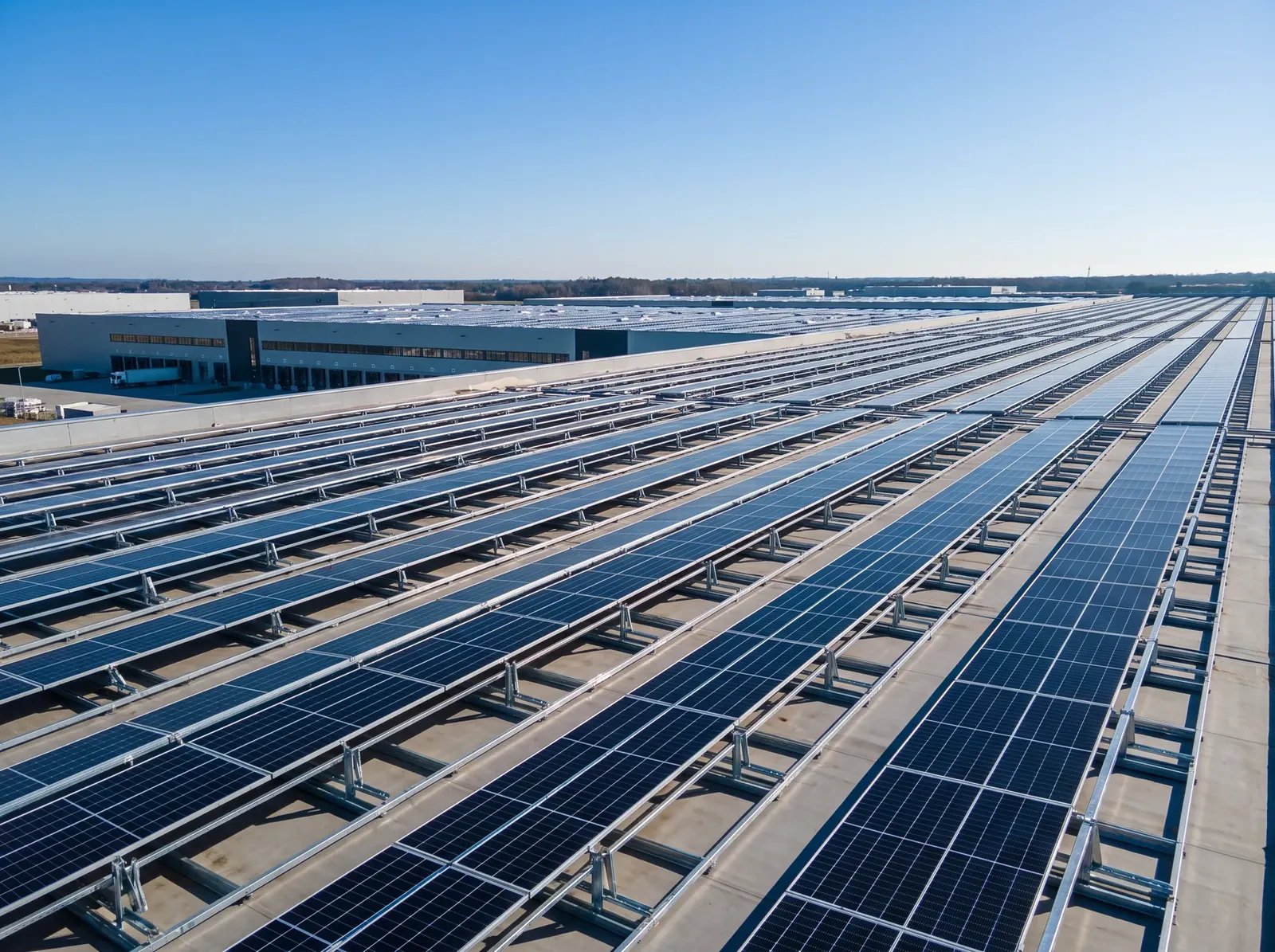
Large industrial and commercial roofs
Large-format high-performance modules are of interest here when space utilisation, system output and the lowest possible number of module-related work steps are the priorities. Commercial storage systems reduce peak demand and increase self-consumption.
Large format and Balance of SystemFurther applications: Agri-PV, glare-sensitive sites (airports, roads, railways, proximity to residential areas) with anti-glare module variants and combined photovoltaic-storage projects.
Solutions
Modules, storage and system assembly – from a single source
Not as many individual products as possible, but a coherent project solution – technically suitable, commercially comprehensible and with clearly defined interfaces.
Modules & technology
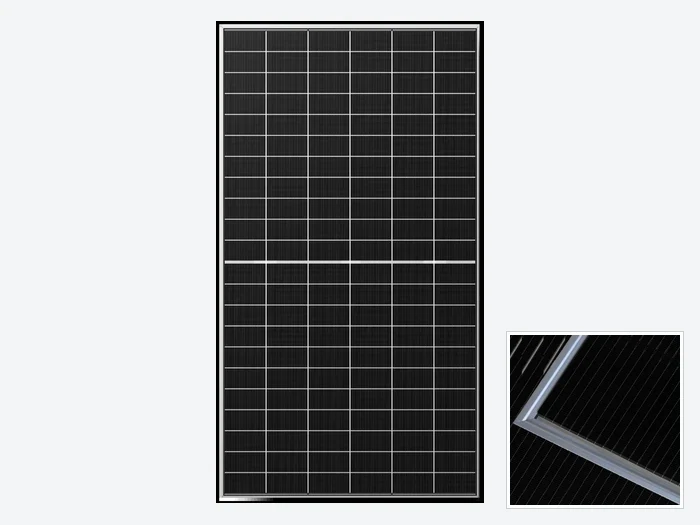
Three module ranges from Risen Energy
- Lead module: Hyper-ion Ultra HJT with steel frame, bifacial, 740–760 Wp, efficiency up to 24.5 %
- Anti-glare: Hyper-ion Anti-Glare, 710–730 Wp, TÜV Rheinland AAA, for airports, railways, roads and proximity to residential areas
- Complementary: n-Type TOPCon, 450–640 Wp, for standard roofs and existing installations
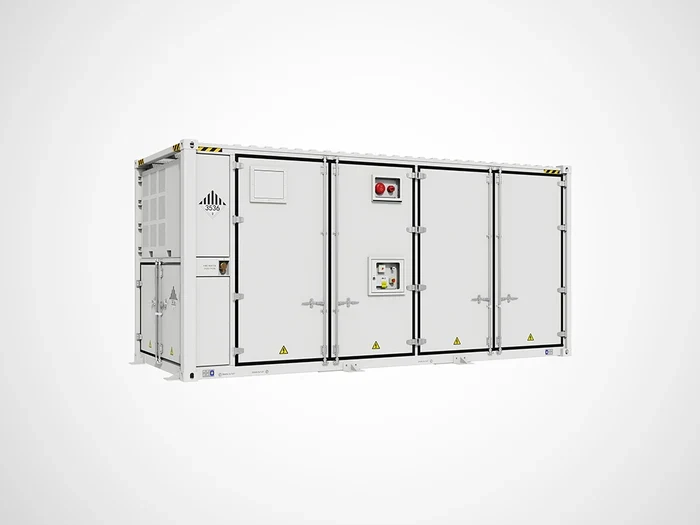
Battery storage
From commercial cabinets to 5-MWh containers
Liquid-cooled LFP storage systems for peak shaving, self-consumption and grid applications. On request, control and data storage in Switzerland – without a connection to manufacturer services.
To the storage systems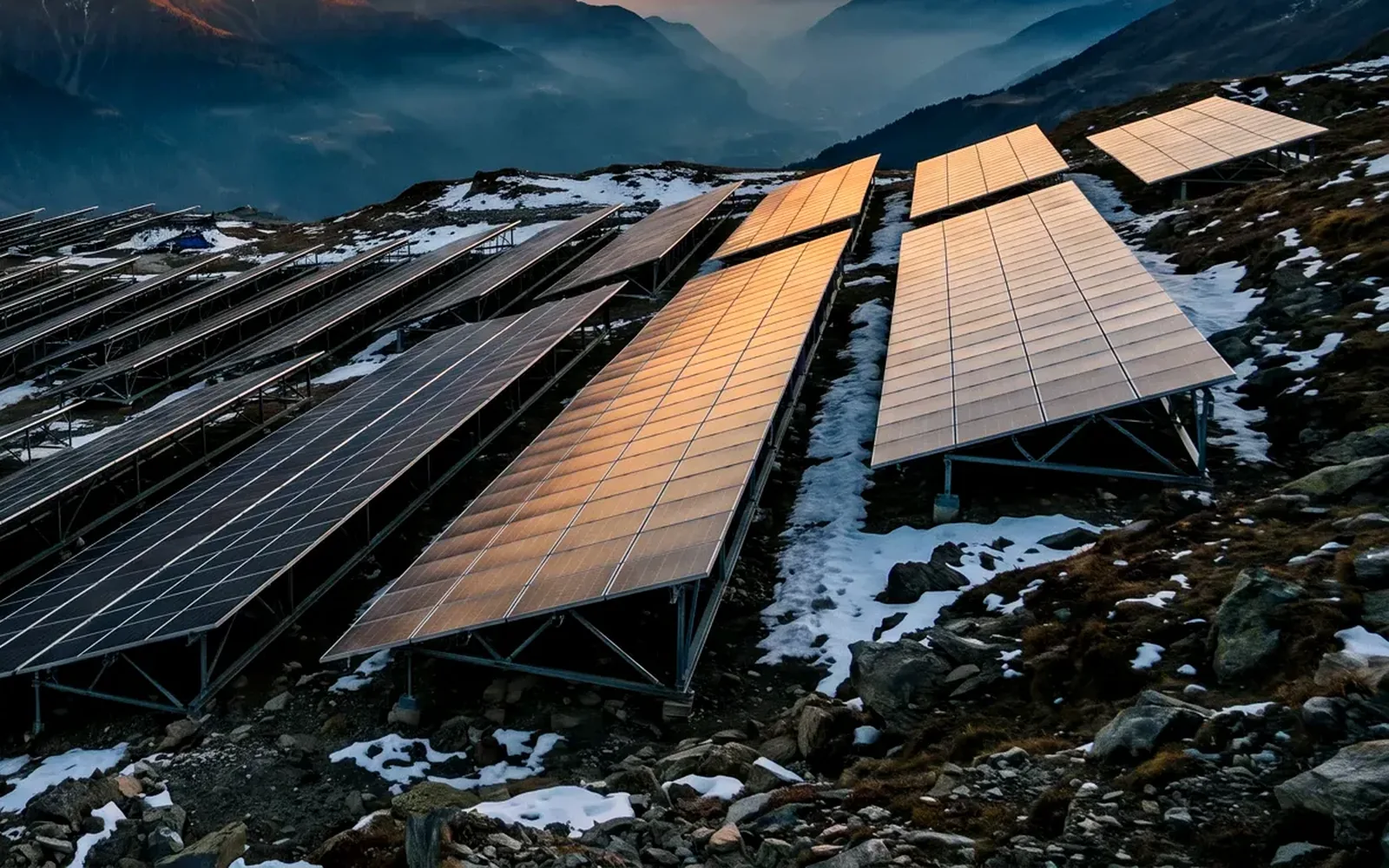
Own system project
GRP Hyperframe for snow, hail and temperature fluctuations
Mechanical heavy-duty system solution with a target of hail class HW 5 and a 13’000 Pa system design case. Planned testing programme with SPF Testing at the Institute for Solar Technology of OST.
To the system projectMotivation and expansion target
Net zero is built in terawatt-hours. We deliver the watts per module.
Switzerland has committed to net zero by 2050 under the Climate and Innovation Act. The Electricity Act sets binding targets for this: at least 35 TWh of electricity from new renewable sources by 2035 and 45 TWh by 2050 – excluding hydropower. Germany’s EEG sets targets of 215 GW of photovoltaics by 2030 and 400 GW by 2040.
The bottleneck is not the module price
What is slowing expansion are available areas, installation hours, grid connections and permits. Every additional watt per module means more installed capacity per installation step, transport, square metre and grid connection point.
Winter electricity is decisive
Alpine and highland plants generate electricity precisely when the Swiss Plateau is under fog. This requires modules, frames and substructures that can withstand snow, hail and temperature fluctuations over the long term. That is exactly what AB NETCOM is working on.
Sources: BAFU – Net-zero target 2050 · energie inside – Electricity Act · EEG 2023 § 4 expansion pathway · Swissolar – Solar energy statistics 2025 · pv magazine – Swiss expansion 2025 · SRF – Alpine solar plants
Large format and Balance of System
More power per module. Fewer modules in the field.
Calculation example for 20 MWp DC rated capacity: The higher the module output, the fewer modules are required for the same plant capacity – without taking project-specific design reserves into account.
Fewer modules mean fewer clamping points, connectors, cable runs, and logistics and installation steps. The actual effect on system balance-of-system costs is calculated on a project-by-project basis; this does not constitute a blanket cost commitment.
System project and testing pathway
Planned testing pathway with SPF Testing at the Institute for Solar Technology at OST
Four test steps for the system assembly comprising the module, Hyperframe and mounting materials. Target schedule: end of 2026 / beginning of 2027. Collaboration only after a separate agreement; no testing has taken place to date.
Hail test
Target class HW 5.
Mechanical load test
With the specified mounting materials.
Snow load and temperature cycling test
Sustained load under cold conditions, uneven load distribution.
Functional testing and documentation
Electrical safety after loading, test report for project partners.
For me, photovoltaics is not just a matter of conviction, but a calculation that adds up – technically, economically and across generations. My goal is for large-scale projects to be built more quickly and safely with the right components.
Company
Technology became a passion. Passion became a business area.
AB NETCOM A. Breig was founded in 1996. Since 2022, the focus has been on photovoltaics, storage, procurement and project preparation; in 2026, this was followed by the official distributorship for Risen Energy and the GRP Hyperframe system project.
-
Technical pre-selection
Modules and storage matched to the site, grid and load profile, yield target, logistics and required documentation.
-
Procurement basis
Product documentation, power classes, quantities, potential delivery windows and commercial prerequisites.
-
Coordinated interfaces
Early involvement of suitable planning, EPC, installation and specialist partners – one German-speaking contact.
Your next energy project
Personal 20-minuteProject check
Site, grid, load profile, yield target and schedule – ultimately, an assessment of whether and how AB NETCOM can contribute to the project. Without obligation and without an overload of documentation. Discussions take place by personal appointment only.